
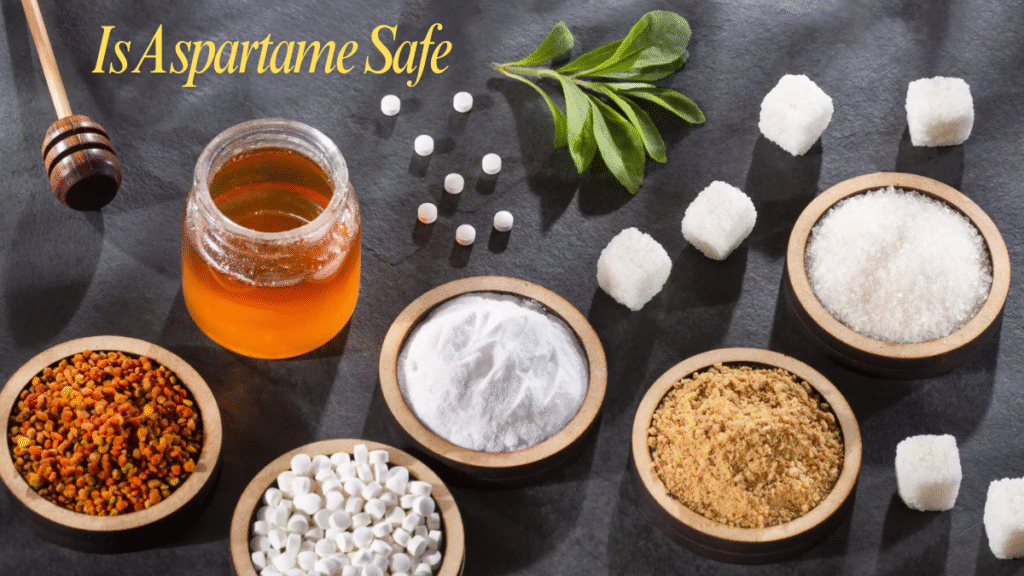
Wondering if aspartame is safe? Discover the facts about this widely used sugar substitute — its benefits, health risks, WHO findings, and what experts say about safe daily intake
Aspartame is one of the most widely used artificial (non-sugar) sweeteners in the world. It is found in diet sodas, sugar-free gum, low-calorie desserts, tabletop sweetener packets and many other products. Because it offers sweetness without many of the calories of sugar, it has long been marketed as a helpful alternative in the battle against excess sugar intake and its associated health problems.
But in recent years, the safety of aspartame has become a topic of renewed debate. Some authorities label it safe within certain limits; others raise concerns about possible risks. This article aims to examine the evidence, explain how aspartame works, review what health agencies say, highlight potential risks (and who might be more vulnerable), and provide guidance for consumers.
What is Aspartame and how is it used?
Aspartame is a dipeptide methyl ester composed of the amino acids aspartic acid and phenylalanine, and when metabolised it also produces a small amount of methanol. It is approximately 200 times sweeter than sugar, meaning only a tiny amount is needed to achieve sweetness in foods and beverages.
Because of this property, manufacturers can use it to reduce calories while maintaining a sweet taste. You’ll find it in diet sodas, sugar-free chewing gum, desserts, yogurt, certain candies, and even medications or chewable vitamins in some formulations.
The flavour-sweetening strategy is not without complexity. For example, although aspartame provides sweetness, its metabolites and breakdown products (like methanol, phenylalanine, and aspartic acid) are the subject of safety scrutiny.
What major health agencies say about its safety
Acceptable Daily Intake (ADI)
Major food-safety regulatory bodies have established an Acceptable Daily Intake (ADI) for aspartame. For example:
- The European Food Safety Authority (EFSA) concluded after a full risk assessment in 2013 that an ADI of 40 mg per kg body weight per day is protective of the general population.
- The World Health Organization (WHO) and the International Agency for Research on Cancer (IARC) released a joint assessment in July 2023. They reaffirmed the ADI of 40 mg/kg body weight per day.
As a practical example, for a 70 kg adult that means an intake of up to about 2,800 mg of aspartame per day (70 × 40). That equates roughly to the amount found in many cans of diet soda—but in reality to reach that maximum you would need dozens of cans in a day (depending on concentration).
Tumour / carcinogenic risk
In their 2023 evaluation, IARC classified aspartame as Group 2B – possibly carcinogenic to humans. That means there is “limited evidence” of carcinogenicity in humans and animals.
At the same time, JECFA (the joint FAO/WHO expert committee) affirmed the ADI and noted that at typical levels of consumption, safety is not considered a major concern.
Other health-system reviews
Earlier reviews such as the AMA’s 1985 report concluded that “available evidence suggests that consumption of aspartame by normal humans is safe and is not associated with serious adverse health effects” (except in individuals with phenylketonuria, PKU).
A 2006 review found no credible evidence of carcinogenicity in humans at the doses tested.
More recent reviews (2023-24) still highlight that many studies show possible risks, especially under high exposure or specific vulnerable groups, but that the evidence remains mixed.
What are the potential risks or concerns?
Even though regulatory agencies mark aspartame safe within certain limits, there are a number of potential concerns worth exploring. Some apply to the general population, some to specific sub-groups, and some remain investigational.
People with phenylketonuria (PKU)
This is one of the clearest contraindications. Phenylketonuria (PKU) is a rare genetic disorder in which the body cannot effectively metabolise phenylalanine, an amino acid component of aspartame. For people with PKU, intake of phenylalanine must be strictly controlled; thus products with aspartame carry a warning.
Neuropsychiatric / neurological concerns
Some research suggests that aspartame’s breakdown products (e.g., phenylalanine, aspartic acid) could potentially affect brain excitatory/inhibitory signalling (glutamate, GABA systems) in susceptible individuals or under high doses. For example:
- A scoping review found indications of neurotoxic effects in animal models, including memory/learning impairments and behavioural dysfunction.
- Another review noted subtle mood/behavioural changes in humans at high daily intakes below the admitted limit, and raised the possibility of increased predisposition for malignant disease in certain cases.
However, it must be emphasised that the human evidence is not strong enough to draw firm conclusions, especially at typical consumption levels. Some regulatory reviews found no effect on behaviour or brain function in children and adults at normal intakes.
Cancer / Carcinogenicity
As already noted, IARC’s classification of aspartame as possibly carcinogenic reflects “limited evidence” of carcinogenicity in humans and animals.
Some epidemiological studies have suggested associations between high aspartame intake and certain cancers (e.g., non-Hodgkin lymphoma, multiple myeloma in males) but these studies often have limitations (e.g., confounding factors, exposure measurement issues).
Earlier reviews concluded no credible evidence that it causes cancer at human-dietary levels.
Metabolic, cardiovascular, and gut-microbiome concerns
Beyond neurological and cancer concerns, emerging studies suggest potential associations (though not proven causation) between aspartame (and artificial sweeteners more broadly) and metabolic outcomes:
- Some research indicates possible effects on insulin, gut microbiota, weight management, and cardiovascular risk—but these are mostly observational and not conclusive.
- For example, one health news piece notes that the WHO has cautioned that long-term use of non-sugar sweeteners may carry “potential undesirable effects” such as increased risk of type 2 diabetes, cardiovascular diseases and mortality in adults.
Dose and exposure matters
A recurring theme in the literature is that dose matters, and that many of the worrisome findings stem from high exposures, animal models, or in individuals with other conditions. Regulatory ADIs are set with large safety margins. For example, the 40 mg/kg body weight/day ADI is many times higher than typical daily intakes for most people.
Thus, occasional or moderate consumption of products with aspartame is likely well within safe bounds for most people. But regular high dose, especially combined with other risk factors or in vulnerable populations, may warrant caution.
What about benefits? Why people use it?
The main appeal of aspartame is that it provides sweetness without (or with much fewer) calories compared to sugar. Potential benefits include:
- Reduced caloric intake from sugar-sweetened foods/beverages
- Possible help in blood sugar control if used to replace sugar (though evidence is mixed)
Indeed, as noted by WebMD, aspartame is “low-glycemic” meaning it does not spike blood sugar like sugar does.
However, benefits should be balanced with realistic expectations: simply replacing sugar with aspartame alone is not a guarantee of weight loss or improved metabolic health. Lifestyle, diet quality, total caloric intake, and activity still matter. The WHO has even cautioned that replacing sugar with non-sugar sweeteners may not confer long-term weight-loss benefits and may carry other risks.
Practical guidance for consumers
Given the evidence, how should a mindful consumer think about aspartame? Here are some practical takeaways:
- Know your exposure – If you consume many diet sodas, sugar-free candies, gums, etc., you may be getting higher doses of aspartame. Estimate roughly what you’re taking based on product labelling and your weight.
- Stay well below the ADI – For a 70 kg adult the ADI of 40 mg/kg/day equals ~2,800 mg/day. Reaching this would require consuming a large number of products with aspartame each day. For most moderate users, exposure is far below.
- Be aware of vulnerable groups –
- People with PKU must avoid phenylalanine sources, including aspartame.
- Pregnant women, people with neurological conditions, or those with high consumption of sweetened products may wish to be extra cautious, especially in light of newer, albeit not definitive, concerns.
- Use aspartame as part of an overall healthy diet – It’s not a ‘free pass’ to consume endless sweet foods. Replacing sugar with aspartame can help lower calories, but diet quality, whole foods, fibre, nutrients, and lifestyle still matter.
- Consider moderation and variety – If you rely heavily on diet products all day, you might benefit from reducing them and incorporating more unsweetened or naturally sweet alternatives (e.g., fruit, moderate natural sweeteners, plain water) to reduce overall exposure to artificial sweeteners.
- Stay informed about new research – Science evolves. The 2023 IARC reclassification to Group 2B was a reminder that “possibly carcinogenic” does not mean proven carcinogenic, but it does mean more research is needed.
- Read the label – Products will typically indicate if they contain aspartame (and often a phenylalanine warning). If you try to track your intake or avoid it, this is useful.
Summary: Is aspartame safe?
Putting it all together:
- For the general healthy population, consumption of aspartame within established limits (e.g., at or below the ADI) is widely considered safe by major regulatory agencies (EFSA, JECFA/WHO, FDA).
- The evidence of harm remains limited or mixed: many animal studies show effects under very high doses; human epidemiological studies have suggested associations in some cases, but causation is not established.
- Risk is not zero: for certain sub-groups (PKU, heavy users, possibly pregnant women, those with neurological conditions) or if consumed in very high amounts, caution is justified.
- Dose matters, and typical moderate consumption (e.g., occasional diet soda or a few sugar-free gums) is unlikely to exceed risk thresholds for most people.
- It’s not a panacea: replacing sugar with aspartame helps reduce calories/sugar but is not the sole solution to weight, metabolic or health issues.
- Emerging science continues to evaluate associations with microbiome, metabolism, cognition, and long-term health; the “possibly carcinogenic” category issued by IARC is a reminder of research gaps.
Final thoughts
Artificial sweeteners like aspartame were developed with a clear goal: provide sweetness without many of the calories of sugar, and thereby help consumers reduce sugar-based calories. In many cases, aspartame has fulfilled that role. Yet, no dietary compound is entirely free of potential risk, especially when consumed in large amounts over long periods or in vulnerable individuals.
If I were to summarise in plain language: Yes, aspartame can be safe for most people when used moderately and within accepted limits. But it is not “risk-free” and should be consumed thoughtfully—not as a licence to load up on unlimited ‘diet’ foods—but as one tool among many in a broader strategy of healthy eating and lifestyle.

