
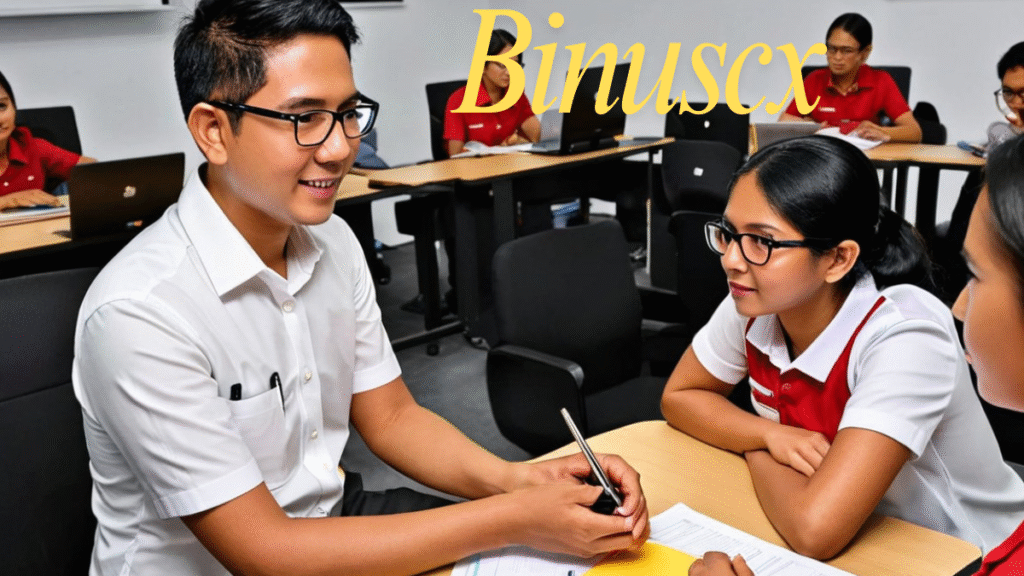
Amidst the fast-changing world of Indonesian higher education, the conventional classroom learning is yielding to more vibrant, experiential methods that equip students for actual difficulties. At the center of this teaching revolution is BinusCX (Binus Creative Experience), a pioneering initiative which has reshaped the manner in which students interact with knowledge and acquire real-world skills. As Indonesia prepares itself to be a key player in Southeast Asia’s digital economy, BinusCX is a paradigm shift towards experience-led learning that is revolutionizing the educational landscape of the country.
Understanding BinusCX: A Revolutionary Approach to Education
BinusCX was Binus University’s response to increasing disconnection between theory and practice in conventional higher learning. Introduced as part of Binus University’s focus on innovation, this revolutionary program incorporates actual experiences into the curriculum, combining a learning environment in which students don’t merely learn about concepts—They live them.
The program functions under the premise that genuine learning takes place as students engage actively in resolving real-world problems, collaborating with industry partners, and producing tangible results that are immediately relevant to their future profession. This methodology fits perfectly within Indonesia’s national aims of creating a skilled workforce capable of both driving economic development and technological progress.
The Evolution of Learning in Indonesia’s Education System
Indonesia’s education system has seen major change in the past few decades. Indonesia’s fast economic growth and deepening incorporation into the global digital economy have generated new expectations from graduates with not only abstract knowledge but also skills, creativity, and flexibility.
Traditional higher education in Indonesia has traditionally focused on rote learning and theoretical knowledge, mirroring broader cultural values around respect for authority and established wisdom. Increasingly, though, as the economy of the country has diversified away from agriculture and manufacturing towards services and technology, there has been increasing recognition that students need to have different kinds of skills to thrive in the contemporary workplace.
Indonesia’s emergence as a startup nation, with its cities of Jakarta and Bandung emerging as significant tech centers, has added further impetus to the need for educational solutions that encourage innovation, entrepreneurship, and creative problem-solving. BinusCX is a direct response to evolving needs, providing a model which other Indonesian institutions are increasingly eager to follow.
Underlying Principles of Experience-Driven Learning at BinusCX
Project-Based Learning and Real-World Application
At the heart of BinusCX lies project-based learning that connects students directly with industry challenges. Rather than completing hypothetical assignments, students work on actual projects for real companies, government agencies, and non-profit organizations. This approach ensures that learning is immediately relevant and that students can see the tangible impact of their work.
Students can develop marketing campaigns for neighborhood companies, produce digital solutions to community issues, or design products that respond to targeted needs of the community. These projects demand students to synthesize learning across multiple subjects, work in teams, and contend with the ambiguity of real-world limitations and stakeholder needs.
Industry Partnership and Mentorship
BinusCX has created extensive partnerships with top Indonesian and multinational corporations in various fields, such as technology, finance, creative industries, and social enterprises. The partnerships offer students access to industry mentors, real-world projects, and insights into existing market trends and issues.
The mentor network for the program consists of successful businesspeople, industry leaders, and creative professionals who advise not only on technical competencies but also on professional growth, networking, and career planning. This mentorship element helps students acquire both hard and soft skills to become successful in their chosen careers.
Interdisciplinary Collaboration
Experience-based learning at BinusCX actively shatters disciplinary silos of traditional academics. Students from varying programs—business, technology, design, communications—are collaborate on cross-disciplinary projects that map the interdisciplinary realities of contemporary professional work.
This teamwork replicates the reality of today’s workplaces, where successful projects often entail knowledge from a variety of domains. Students learn to communicate across disciplines, value diverse points of view, and combine diverse skill sets to converge on common objectives.
Impact on Student Development and Career Outcomes
The experience-based learning strategy at BinusCX has seen remarkable outcomes in student engagement, capability building, and readiness for careers. Students indicate higher motivation and satisfaction with the learning experience since they are able to visually see the application and relevance of their studies directly.
Career outcomes for BinusCX graduates illustrate the success of this approach. Several graduates have started their own successful companies, found jobs at top companies, or continued their education with a definite idea of how their educational background serves their career objectives. The program’s focus on portfolio development assures that students graduate with concrete evidence of their abilities and accomplishments.
Another important contribution is the creation of entrepreneurial mindsets. Even those who do not become entrepreneurs transfer innovative thinking and problem-solving skills to their functions in established firms, helping Indonesia’s overall objective of raising innovation and competitiveness.
Technology Integration and Digital Literacy
BinusCX recognizes that digital literacy is no longer optional in Indonesia’s evolving economy. The program integrates cutting-edge technologies into the learning experience, ensuring that students are comfortable with digital tools and platforms that are increasingly central to modern work.
This involves exposure to new technologies such as artificial intelligence, blockchain, virtual reality, and data analytics, in addition to more traditional digital marketing, e-commerce, and social media platforms. Students learn not only to utilize these technologies but also to critically consider their uses and consequences.
The program’s technology focus also aligns with Indonesia’s national digital transformation agenda, which is to use technology to spur economic growth, enhance public services, and improve global competitiveness.
Closing Indonesia’s Skills Gap
Indonesia struggles to build a high-skilled workforce that can meet the needs of its expanding economy. Digital literacy, creative thinking, problem-solving, and entrepreneurship are among the skill gaps that the World Bank and other international organizations have listed as key constraints for Indonesia’s economic growth.
BinusCX bridges those gaps directly by giving students practical experience in those areas. The emphasis on creativity, innovation, and practical problem-solving in the program serves to create just the sorts of skills that employers want and that Indonesia must have to meet its economic development objectives.
Cultural Adaptation and Local Relevance
One of BinusCX’s greatest strengths lies in its capacity to translate global best practices in experiential learning into the Indonesian context. The program is at the same time respectful of local cultural values while fostering innovation and critical thinking. This cultural sensitivity is important for the success and integration of the program within Indonesia’s educational establishment.
The program includes Indonesian case studies, tackles local issues, and engages students with the entrepreneurial ecosystem of the country. This local applicability has the result that students gain skills that are immediately translatable to their immediate surroundings as well as being prepared for international opportunities.
Challenges and Opportunities in Scaling Experience-Driven Learning
Though BinusCX has proven the success of experience-driven learning, implementing this across Indonesia‘s vast and heterogenous educational framework is beset by tough challenges. These are resource limitations, developing faculty competencies, industry partnership demands, and supportive policy mechanisms.
But the potential is just as great. With Indonesia forging ahead into digital transformation and aspiring to become a regional innovation center, models such as BinusCX offer a blueprint for education providers nationwide.
The COVID-19 pandemic has also driven faster-than-ever adoption of new education models, opening up greater receptiveness to experimentation and reform in Indonesia’s education market. This offers an unprecedented chance to scale experience-led learning programs.
Future Implications for Indonesian Higher Education
BinusCX’s success is impacting educational policy deliberation at the national level and motivating similar efforts at other Indonesian universities. The educational program proves that maintaining academic solidity is possible while making learning more appealing, applicable, and effective.
With more institutions embracing experience-oriented models, we can look forward to further development of Indonesian higher education toward more practical, industry-focused, and student-centered paradigms. The shift is critical in order for Indonesia to realize its vision as a developed economy and global knowledge economy powerhouse.
Conclusion: Leading the Educational Revolution
BinusCX is more than a visionary educational program—it is a back-to-basics transformation to learning strategies that are more responsive to Indonesia’s changing economy and society. By placing emphasis on experience, practicality, and applicability, the program is not only preparing students for their initial employment but also for a more dynamic and uncertain working life ahead.
As Indonesia forges ahead with its phenomenal economic and social progress, educational innovations such as BinusCX will become critical in helping the nation’s human capital keep up with its aspirations. Experience-based learning in Indonesia is not only changing individual institutions—it’s shaping the future of Southeast Asia’s biggest economy.
The lessons so gained are not contained within Indonesia’s shores, but hold lessons for institutions of learning all over the world that are faced with such challenges of relevance, interaction, and preparation for careers. With a future characterized by rapid change and mounting global competition, experiential learning models such as those that have been driven at BinusCX quite possibly are the future of higher education itself.


thanks for the info, visit us at unissula kampus islam
Pingback: Blooket join How to login Games Instantly – Student-Friendly Guide for 2025 - thewheon.co.uk