
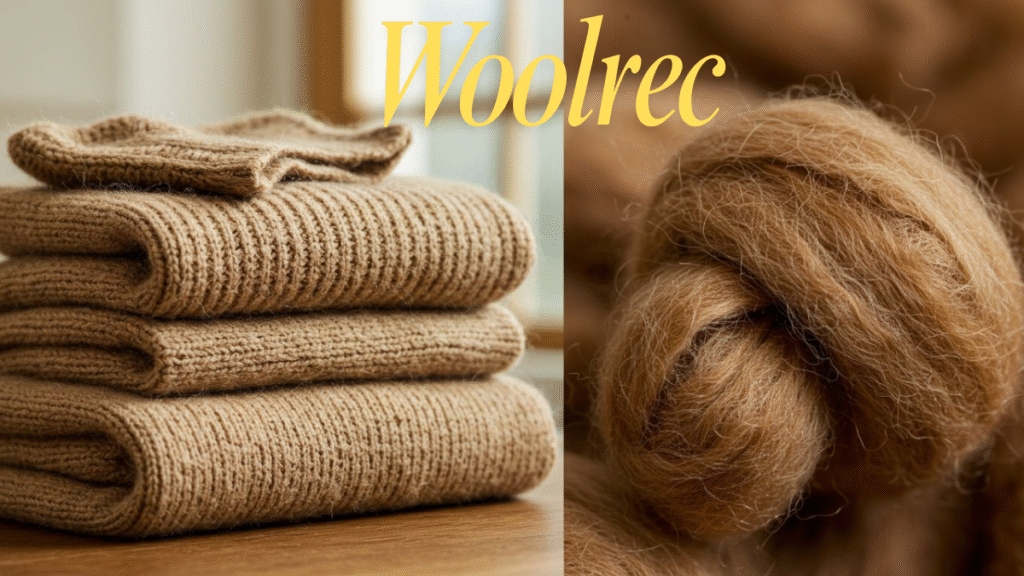
In an age where environmental concerns have finally found their rightful place in the spotlight, industries across the board are being challenged to rethink their practices. Among them, the textile industry has been particularly scrutinized for its role in pollution, resource depletion, and waste. Yet, amid the noise and urgency, a quiet revolution is taking place — and it’s woven not in synthetic innovation, but in something as traditional as wool. At the heart of this transformation is Woolrec, a pioneering initiative aimed at reshaping how we view, handle, and reuse wool in a circular, sustainable future.
Woolrec isn’t just about recycling textiles. It’s about reimagining an entire system — one that respects nature, honors craftsmanship, and understands that sustainability isn’t a trend, but a necessity.
The Wool Problem (and Opportunity)
Wool has long been considered a luxury, natural fiber — valued for its durability, warmth, and breathability. But like many other materials in fashion and home textiles, the reality behind its production and disposal is more complicated than it seems.
Every year, thousands of tons of wool clothing and textile waste are discarded, much of it ending up in landfills or incinerators. This is not only a waste of valuable material but also an environmental setback. Despite being biodegradable, when wool is treated with chemicals or blended with synthetic fibers, it can lose its ability to break down naturally — becoming just another form of pollution.
And yet, wool holds incredible potential for circularity. It can be re-spun, felted, reused, or reimagined — if we have the right systems in place. That’s where Woolrec comes in.
What is Woolrec?
Woolrec is an emerging force in sustainable textile innovation. While not a household name — yet — it’s quickly gaining traction among environmentally conscious manufacturers, designers, and consumers. At its core, Woolrec is a wool recycling and repurposing initiative focused on minimizing textile waste and maximizing the lifecycle of wool-based products.
But it’s more than just a recycling program. Woolrec represents a mindset shift: from linear consumption to circular design. Instead of the traditional model — make, wear, toss — Woolrec promotes a regenerative loop. Here, every wool item is viewed as a resource that retains value beyond its first use.
Whether it’s post-consumer wool clothing, offcuts from factories, or discarded upholstery, Woolrec collects, processes, and transforms these materials into high-quality fibers ready for new life.
How Woolrec Works: A Closed-Loop System
The magic of Woolrec lies in its ability to create a closed-loop wool recycling ecosystem. It’s not a one-size-fits-all model, but rather a tailored approach built around collaboration, local sourcing, and clean technology.
1. Collection and Sorting
The first step is gathering wool waste. Woolrec partners with garment manufacturers, tailoring studios, retailers, and even community initiatives to collect unwanted wool items. These range from high-end wool suits to worn-out sweaters and factory floor clippings.
Advanced sorting technology — aided by both human expertise and digital systems — helps Woolrec identify wool content, separate blended fabrics, and assess which fibers are suitable for reuse or transformation.
2. Cleaning and Processing
Once sorted, the wool is cleaned using eco-friendly processes that minimize water and chemical use. This is a crucial step, as many traditional cleaning methods involve harsh detergents and heavy water consumption.
Depending on the fiber quality, the wool may then be shredded, carded, and re-spun into new yarns. For lower-grade materials, the wool might be felted or used for insulation, padding, or industrial fabrics — nothing goes to waste.
3. Rebirth as New Products
What emerges from the Woolrec system isn’t a “recycled product” in the traditional sense. These materials are refined, durable, and high-performing — ready to be used in new garments, upholstery, footwear, and beyond.
Woolrec collaborates with eco-conscious brands and designers who are looking for sustainable, high-quality raw materials. The result? Timeless garments and goods with reduced environmental impact and a compelling story behind them.
Designing for Circularity: The Woolrec Philosophy
One of the most exciting things about Woolrec is how it invites designers to think differently. Recycling isn’t just a final step — it starts with design.
Woolrec encourages brands to adopt design-for-disassembly and mono-material construction, which means garments made entirely of wool, without plastic zippers or synthetic linings. These kinds of design choices make future recycling easier and more efficient.
In this way, Woolrec doesn’t just offer a service; it pushes an entire philosophy — that fashion should be regenerative, thoughtful, and built to last.
Local Impact, Global Vision
Woolrec’s approach is deeply rooted in local ecosystems. Instead of centralizing production in far-off factories, it builds regional hubs that can collect and process wool within local communities. This means lower transportation emissions, more transparent supply chains, and greater accountability.
These hubs also create jobs — not just in recycling, but in education, outreach, and skilled labor. Woolrec doesn’t just want to change materials; it wants to change the culture around wool.
At the same time, its vision is global. Wool is produced and consumed worldwide, and Woolrec sees the potential to set a new standard for textile recycling that could be replicated across continents. It’s not about creating a monopoly — it’s about creating a movement.
Why Wool? The Natural Advantage
Among natural fibers, wool is uniquely suited to recycling. Unlike cotton, which loses strength when recycled, wool can be pulled apart and re-spun with minimal degradation — especially when it’s high-quality to begin with.
Wool is also:
- Biodegradable, breaking down in soil without leaving microplastics.
- Naturally antimicrobial, requiring less frequent washing and extending garment life.
- Thermoregulating, keeping you warm in winter and cool in summer.
- Durable, meaning it’s made to last — and made to be remade.
When treated with respect, wool can outlive most synthetic alternatives by decades. Woolrec taps into this strength, giving wool multiple lifespans.
Tackling Fast Fashion and Consumer Waste
The rise of fast fashion has conditioned consumers to treat clothing as disposable. This mindset fuels overproduction, resource waste, and mountains of textile trash. Woolrec stands in direct opposition to this model.
By giving wool a second life — and making that process visible and inspiring — Woolrec helps shift the narrative. Clothes are not trash. They are resources. Legacies. Labor. They have worth far beyond their first wear.
Woolrec also educates consumers about care and longevity. How to wash wool correctly, how to repair minor damage, how to recycle responsibly. These small acts of care multiply into meaningful change.
Challenges and the Road Ahead
Of course, no revolution is without obstacles. Woolrec faces several challenges on its path to scale:
1. Blended Materials
Many modern wool garments are mixed with synthetics like polyester or nylon for stretch and durability. These blends complicate recycling, requiring new innovations in fiber separation and sorting.
2. Infrastructure
While Woolrec has established local hubs, building a full global network requires time, investment, and policy support. Infrastructure for textile recycling is still underdeveloped in many parts of the world.
3. Awareness
Despite growing concern about sustainability, many consumers and brands still aren’t aware of how their choices impact the planet — or that wool recycling is even possible.
Yet, Woolrec remains undeterred. Through partnerships, education, and relentless innovation, it continues to build a new model — one garment at a time.
A Greener Future, One Thread at a Time
Woolrec isn’t just a business. It’s a response to the urgent call of our time — to live more sustainably, produce more responsibly, and consume more thoughtfully.
In every wool fiber it recycles, in every designer it empowers, in every consumer it educates, Woolrec is weaving a new story: one where waste becomes beauty, old becomes new, and fashion finds harmony with the earth.
The future of wool — and perhaps the future of textiles — is not about faster, cheaper, or trendier. It’s about smarter. Cleaner. Circular. That’s the future Woolrec is working toward. And it’s a future we can all be part of.


Pingback: Why SNNBytes XCV Panels Are Revolutionizing Home Energy in 2025 - thewheon.co.uk
Pingback: Diadem - bridal lehe Regal Elegance Meets Modern Lehenga Couture latest gudie 2025 - thewheon.co.uk