
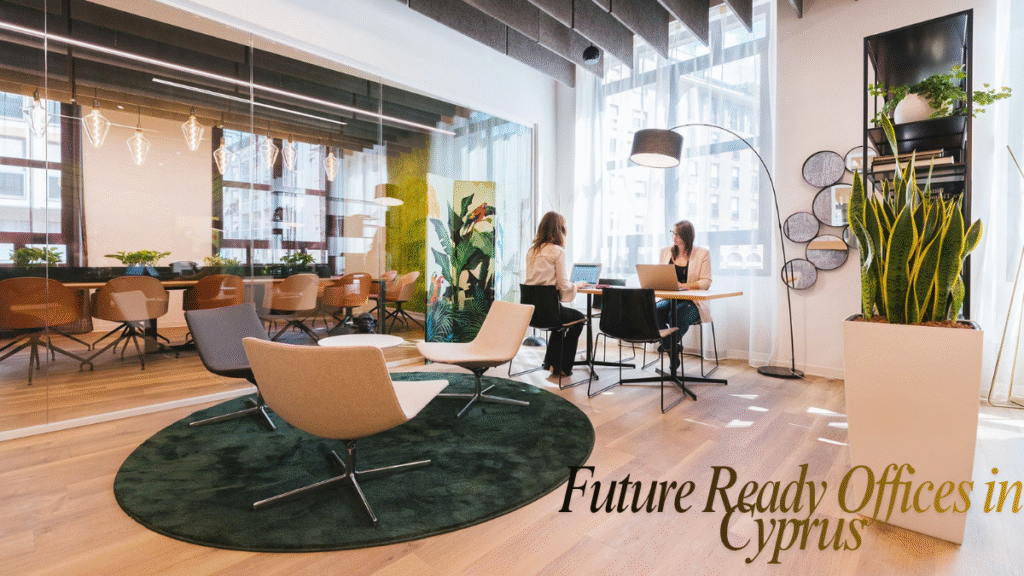
Cyprus, once known primarily for its beaches, tourism, and Mediterranean charm, is now emerging as a vibrant hub for business innovation and workspace reinvention. As companies globally—and locally—transition toward hybrid working, technological agility, and sustainability, the office of yesterday is giving way to the Future Ready Offices in Cyprus this shift is being realised in real time: offices are no longer just places where people go to sit at a desk. They are dynamic environments, blending cutting‑edge tech, flexible layouts, wellness‑driven design and cultural connection. This article explores how and why Cyprus is embracing the smart office, what it means for companies and employees, and the broader implications for workforce, culture and property investment.
Why Cyprus? A Shift in the Business Landscape
Several factors make Cyprus an interesting setting for this workspace evolution.
- Hybrid work as the new norm: Because of the pandemic and its after‑effects, businesses globally are embracing hybrid models—some days in office, some remote. Offices in Cyprus are responding to that shift by redesigning spaces that are not rigid but adaptable.
- Global talent & relocation: Cyprus has become a magnet for European, tech and startup talent. With lower cost compared to major cities, strong connectivity, and appealing lifestyle, companies are choosing Cyprus for regional hubs. That drives demand for modern, high‑quality office space.
- Sustainability & wellness focus: As employee expectations change, and as ESG (environmental, social, governance) criteria become more important, office design that supports wellness, sustainability, and flexibility is being seen as a strategic investment rather than a cost.
- Cultural & natural backdrop: The island offers natural beauty, climate, and a cultural identity that can be integrated into workspace design in authentic ways—this adds value in recruitment, branding and workplace experience.
So the scene is set: businesses in Cyprus recognise that a modern office isn’t just “a place you go” but “a place that works for you”. Let’s dig deeper into the key facets of what makes an office future‑ready in Cyprus.
Key Features of Future Ready Offices in Cyprus
1. Flexibility & Modular Layouts
Gone are the rows of identical desks. Instead, offices now design for adaptability—spaces that can shift from individual focus work to team collaboration in minutes. Mobile partitions, adjustable furniture, movable walls and zones that can morph depending on tasks are becoming mainstream.
In Cyprus, this is especially relevant: many companies adopted hybrid working and need their offices to support both remote‑connected employees and in‑office days. A layout that can switch between “quiet zone” and “brainstorm hub” is a huge win.
2. Smart Technology Integration
Being Future Ready Offices in Cyprus means leveraging IoT, automation, data and connectivity. Offices in Cyprus are starting to implement smart lighting; climate/ventilation systems that respond to occupancy; booking systems for rooms/desks; and advanced AV for seamless virtual collaboration. For example, one development in Paphos uses face‑ID entry, smart lockers, and a dedicated app for building services.
Tech integration also allows analytics: how spaces are used, what zones are most active, where bottlenecks happen. That insight lets companies optimise usage and cost.
3. Wellness & Biophilic Design
Employee well‑being is no longer “nice to have”—it’s core. Offices are incorporating natural light, indoor plants, living walls, nature‑inspired materials, quiet zones, ergonomic furniture and spaces for movement or rest. Studies show such environments reduce stress, increase creativity and sustain productivity.
In Cyprus, where nature is abundant, this trend is hitting home. Offices are blending the Mediterranean sunlight, sea‐views or mountain vistas with interior design that invites nature in.
4. Sustainability & Green Building Standards
When thinking Future Ready Offices in Cyprus, sustainability must be front of mind. Cyprus is seeing major projects designed to meet LEED or Fitwel certifications—the globally recognised marks of green, healthy buildings. For example, a new office tower in Limassol is being developed to meet LEED Gold standards.
Features include: solar panels, energy‑efficient lighting systems, low‑flow water fixtures, use of recycled and local materials, and designs that reduce waste and promote occupant health.
5. Culture, Place & Identity
Future Ready Offices in Cyprus doesn’t mean “cookie‑cutter global office”. One of the strengths of Cyprus is the opportunity to embed local culture, climate and heritage into workspace design. Colour palettes inspired by sea or earth tones, materials linked to local craftsmanship, and cultural art‑pieces that root the space in place.
Employees feel more connected, engaged and valued when their environment reflects context and identity.
6. Community & Experience Rather Than Just Work
Finally, the modern office is partly about experience and community. Offices in Cyprus are introducing lounges, event spaces, cafés, shared outdoor zones, and collaboration hubs. The idea is that the office becomes a destination, not just a workstation. One workspace in Paphos even hosts AI‑summers, meet‑ups and events.
Case Studies & Local Highlights
To illustrate these features in action, here are some examples from Cyprus:
Beon Active Office (Paphos)
Located in Paphos, this office is described as possibly “the most technologically‑advanced office in Cyprus”. It features smart lighting, climate control, automated systems, mobile apps for building services, and is designed for hybrid use with flexible auditoriums, co‑working areas and team spaces.
The building also puts employee experience first: indoor/outdoor lounges, event hall, café, and communal areas that shift the office beyond desks.
Neocleous Tower (Limassol)
This 26‑floor tower is designed to be sustainable—LEED certified—and offers flexible office floors, modern communal amenities, eco‑friendly design and connectivity. neocleoustower.com
What’s especially noteworthy: the building was intentional from the ground up to be “green” and future‑oriented, not just retrofitted.
The Triangle (Limassol)
Another major project launching in Limassol, designed as a modern business centre with open‑plan offices, amenities like showers and bike parking, rooftop garden and a sustainable design aiming for LEED Gold.
These examples show the breadth of Future Ready Offices in Cyprus design: from smaller scale flexible offices to full high‑rise business centres.
Strategic Benefits for Companies
Why should companies invest in a Future Ready Offices in Cyprus (or anywhere)? The benefits span culture, productivity, talent and cost.
- Attracting and retaining talent: The workplace now plays a major role in how people choose jobs. Younger workers expect flexibility, wellness and a meaningful environment. A well‑designed office can enhance employer branding and retention.
- Productivity and engagement: Studies show that layouts, lighting, air quality and nature exposure all affect how people perform. By designing for wellbeing and adaptability, companies can increase output and reduce absenteeism.
- Flexibility & cost efficiency: Modular design and smart systems allow better utilisation of space: fewer under‑used desks, more dynamic zones. Over time this saves cost and improves utilisation.
- Sustainability -> cost savings & brand value: Green buildings mean lower utility costs, reduced carbon footprint, and stronger corporate social responsibility stories. These are increasingly important for investors, clients and regulators.
- Adaptation to change: The world of work is uncertain—remote, hybrid, distributed teams, global markets. A Future Ready Offices in Cyprus is prepared for evolution, not stuck in old formats.
- Local context advantage: In Cyprus, companies that adopt Future Ready Offices in Cyprus can leverage lifestyle, talent attraction (both local and international), and the island’s connectivity to broader markets.
Challenges and Considerations
Of course, shifting to this kind of workspace isn’t without its hurdles. Companies and developers must consider:
- Initial investment cost: Smart systems, flexible furniture and high‑quality finishes cost more up front. The return is often medium‑to‑long term.
- Change management: It’s not just about design—the culture and process must align. Employees need to understand how to use flexible zones, book smart rooms, adapt to different modes of working.
- Technology maintenance and integration: Smart systems require ongoing maintenance, updates and cybersecurity considerations.
- Balancing space and budget: In smaller markets like Cyprus, companies must carefully select which features deliver the most impact for their team size and business model.
- Regulation and certification: Green building standards (LEED, Fitwel) involve compliance and sometimes additional cost/time. Not all organisations are familiar with those frameworks.
- Hybrid working dynamics: With many people working from home part of the time, office utilisation may drop—so businesses must design for varied use rather than maximum occupancy alone.
Steps to Building a Future Ready Office in Cyprus
Here’s a suggested roadmap for companies or property owners in Cyprus looking to embrace this shift:
- Assess your needs & strategy: Define what your workforce looks like (remote/hybrid mix, collaborative vs solo work), company culture, talent strategy, budget, and location.
- Choose flexible layout models: Opt for modular furniture, zones that can adapt, reduce fixed walls, create spaces for different types of work (focus, collaboration, relaxation).
- Incorporate smart technology: Start with core smart systems such as occupancy sensors, lighting and climate automation, meeting‑room booking. Expand as you scale.
- Design for wellbeing & nature: Maximise natural light, incorporate plants or greenery, use local natural materials, provide quiet zones, wellness or movement areas.
- Embed sustainable practices: Investigate green certifications, energy efficiency, recycled/locally‑sourced materials, waste reduction, water savings.
- Reflect local identity: Engage local designers/architects who can integrate Cyprus’s cultural palette, materials and climate awareness into the design.
- Engage the people: Involve employees in design process, pilot spaces, ask for feedback. The most successful offices have employee buy‑in. dom.com.cy
- Measure and iterate: Use occupancy data, employee satisfaction surveys, utilisation metrics to refine space over time.
- Plan for future evolution: Ensure your systems, furniture and layout can adapt to changing needs—new teams, growth, different working modes.
What This Means for Property & Real Estate Investors
For owners and developers in Cyprus, the shift to Future Ready Offices in Cyprus offers significant opportunity.
- Properties that meet modern standards (flexibility, tech, sustainability) command higher rents, lower vacancy and longer leases.
- Green building certifications increase asset value and attractiveness to international tenants.
- The demand for smaller, flexible suites (co‑working, serviced offices) is rising—especially for startups, scale‑ups and international companies looking at Cyprus as a base.
- Retrofitting older stock becomes a viable strategy: converting rigid layouts into agile, wellness‑centric spaces.
- Because Cyprus offers lifestyle appeal, real estate near transit, city centres, or views (sea/mountains) becomes more desirable when combined with modern design.
The Employee and Cultural Impact
A Future Ready Offices in Cyprus isn’t only about bricks and tech; it affects how people work, feel and connect.
- Collaboration vs Isolation: With hybrid working, in‑office days need to feel purposeful. The design must encourage connection, serendipity and informal encounter—so the office becomes a place worth coming to.
- Well‑being & mental health: Well‑designed spaces reduce stress, support concentration, and offer places to recharge. This contributes to happier, more creative teams.
- Inclusivity and belonging: When offices reflect local culture, provide comfortable spaces and allow personalisation, employees feel more valued and aligned with organisation.
- Learning & innovation culture: Flexible zones encourage idea‑sharing, cross‑team interaction and creativity. These environments help companies stay agile and innovate quicker.
- Talent attraction globally: Many roles are remote‑capable, so people choose not just the job but the base. A high‑quality workspace in Cyprus can be a magnet for talent who want an appealing lifestyle plus strong working environment.
Looking Ahead: Trends to Watch in Cyprus
As the future‑ready office ecosystem grows in Cyprus, here are some emerging angles to keep an eye on:
- Hybrid + global workforce: Offices that support teams spread across time‑zones, remote hubs and fluid presence will become more common. This means more global collaboration zones, asynchronous spaces and remote‑enabled features.
- Data‑driven workspace optimisation: Use of sensor and occupant‑usage data will shape how spaces evolve. Which zones get used? When? For how long? This insight will drive smarter leasing, space‑footprint reduction and cost savings.
- Health and wellness beyond basics: Think circadian lighting, air‑quality monitors, wellness programmes integrated with physical space, meditation zones, even outdoor workspaces given Cyprus’s climate.
- Flexible leasing & subscription models: More property owners may adopt service‑model leasing (office as a service) rather than long‑term fixed leases. Particularly attractive for smaller firms and international entrants.
- Augmented Reality (AR)/Virtual Reality (VR) and immersive collaboration: With hybrid teams, offices may incorporate VR/AR meeting rooms or immersive zones where remote and in‑office employees feel connected seamlessly.
- Cultural and climate‑responsive design: Given the Mediterranean context, more offices will use passive design (natural ventilation, shading, orientation), while also embedding local culture and heritage into spatial aesthetics.
- Retrofit and up‑cycle older stock: Much of Cyprus’s office stock is older; retrofitting to modern standards (tech, sustainability, wellness) will be a major growth area.
Final Thoughts
The office is no longer an after‑thought in business strategy—it is central. In Cyprus, we are witnessing a smart shift in how workspace is conceived, designed and used. From flexible modular layouts and smart building tech, to wellness‑driven environments and strong sustainability credentials, Future Ready Offices in Cyprus are becoming a competitive advantage—for companies, employees, developers and investors alike.
For businesses in Cyprus this means making a choice: stick with legacy spaces or embrace the new paradigm. The rewards of embracing it are many: improved talent recruitment and retention, increased productivity, greater agility, lower cost of change and a workspace that resonates with the culture and identity of the island. For the individuals who work in these spaces, it means a place that supports not just what they do, but how they feel and how they grow.
As Cyprus continues to evolve as a business location, the office will play a major role in defining its success story. A future‑ready office isn’t just about being stylish—it’s about being smart, human‑centric and resilient. For any company looking to thrive in the next decade, investing in the right workspace is no longer optional—it’s essential.

Pingback: Stay Always Updated with Txepc Expert Estate Planning, Legal Insights & Tech Trends in One Hub - thewheon.co.uk
Pingback: Stay Always Updated with Txepc Expert Estate Planning, Legal Insights & Tech Trends in One Hub
Pingback: Seventhway - find premium jobs now Discover Top Career Opportunities for Ambitious Professionals in 2025 - thewheon.co.uk